Fee reminders are necessary. Done badly, they’re also one of the quickest ways to upset parents. A stern notice read out in class, a list of defaulters posted on a board, a warning sent to every family including those who paid early — each one damages goodwill the school worked hard to build.
The problem: reminders that hit the wrong people the wrong way
Blanket messages
When the school can’t easily tell who has paid, it sends the same reminder to everyone. Families who paid on time feel accused, and the message loses its force for those who actually need it.
Public pressure
Telling children in class that their fees are pending, or sending notes home in their bags, puts the burden on the student. It’s embarrassing for children and resented by parents.
Escalating too fast
When defaults are noticed late, the first reminder is often a threat — “results will be withheld.” Families who simply forgot are treated the same as genuine defaulters.
Phone calls at awkward times
Individual calls are time-consuming for staff and can feel intrusive to parents, especially when made repeatedly.
Principles of a good fee reminder
- Private: addressed to the parent, never through the child or in public.
- Targeted: sent only to families who actually owe.
- Timely: soon after the due date, while the amount is small.
- Clear: the amount, the due date, and how to pay.
- Respectful: assumes good faith first.
- Escalating gradually: friendly first, firmer only if needed.
How Aschool makes respectful reminders easy
Know exactly who owes
Every voucher’s status updates as payments are recorded, so the overdue list is accurate. No more guessing — and no more reminders to families who’ve already paid.
Message only those families
The Communication Center can send messages to individual parents or a specific group, so reminders go only where they’re relevant — privately, and through WhatsApp when available.
The voucher is already in their hand
Parents can open the voucher in the mobile app or portal, with the amount and due date. The reminder can simply point them there.
Consistent late-fee rules
Because late-fee rules are applied by the system, the reminder doesn’t need to argue about charges — the rules are the same for everyone.
A sample three-step sequence
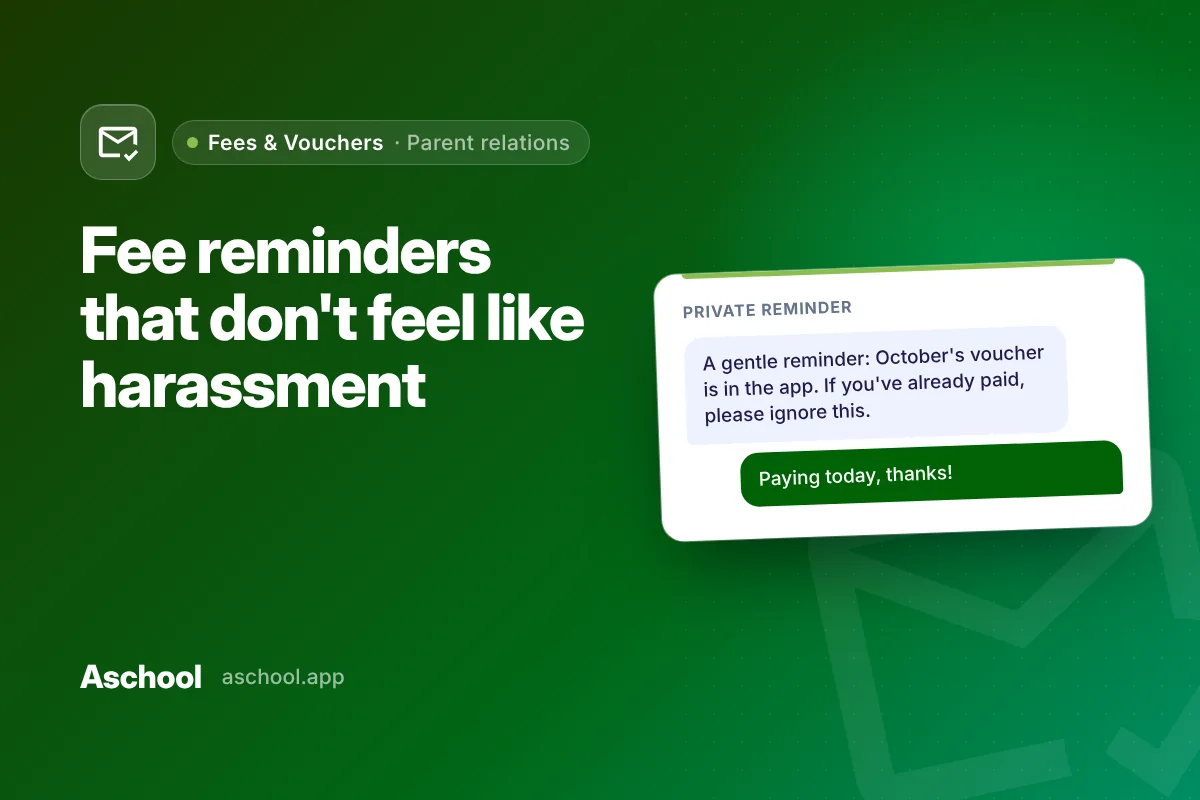
- A few days after the due date: “A gentle reminder that this month’s fee voucher is available in the app. If you’ve already paid, please ignore this message.”
- Two weeks later: “Our records show this month’s fee is still pending. Please let us know if there’s any difficulty — we’re happy to discuss.”
- If still unpaid: a personal call or meeting invitation from the accounts office or principal.
Conclusion
Most parents want to pay. The right reminder, sent privately to the right family at the right time, is usually all it takes. See targeted reminders in an Aschool demo.