Ask any school owner what keeps them up at night and outstanding fees will be near the top of the list. The frustrating part is that most fee defaults don’t happen suddenly. A family misses one month, then pays half the next, then quietly skips the exam fee. By the time anyone notices, the outstanding balance has grown to several months and the conversation has become uncomfortable for everyone.
The problem: defaults are invisible until they’re large
In a manual fee system, the information needed to spot a defaulter exists, but it is scattered. Paid challans sit in one file, the bank’s deposit slips in another, and the class teacher’s sense of “this family is usually late” lives only in their head. To find out who owes what, someone has to sit down and cross-check every voucher book against every receipt.
That job is so time-consuming that it usually happens only a few times a year — often just before final exams, when the school is deciding whether to withhold result cards. At that point, a family that owed one month’s fee in September may owe five months by February. The amount is now hard for the parent to pay and hard for the school to recover.
There’s a second problem too: when defaults are discovered late, schools tend to respond harshly because the numbers are large. That damages relationships with families who might have paid easily if they had been reminded early and politely.
Why early detection matters more than strict policy
Most parents who fall behind are not refusing to pay. They forgot, they were travelling, or they had a tight month. A gentle reminder in the first week after the due date usually solves the problem. A reminder sent after four months rarely does. The single biggest lever a school has is not a stricter policy — it’s knowing sooner.
How Aschool solves it
Every voucher has a status, all the time
Because Aschool generates every student’s voucher from the fee structure you define, each voucher is a live record with a due date and a status. When a payment is recorded, the status updates immediately. There is no separate register to reconcile — the system already knows which vouchers are paid, partly paid, or overdue.
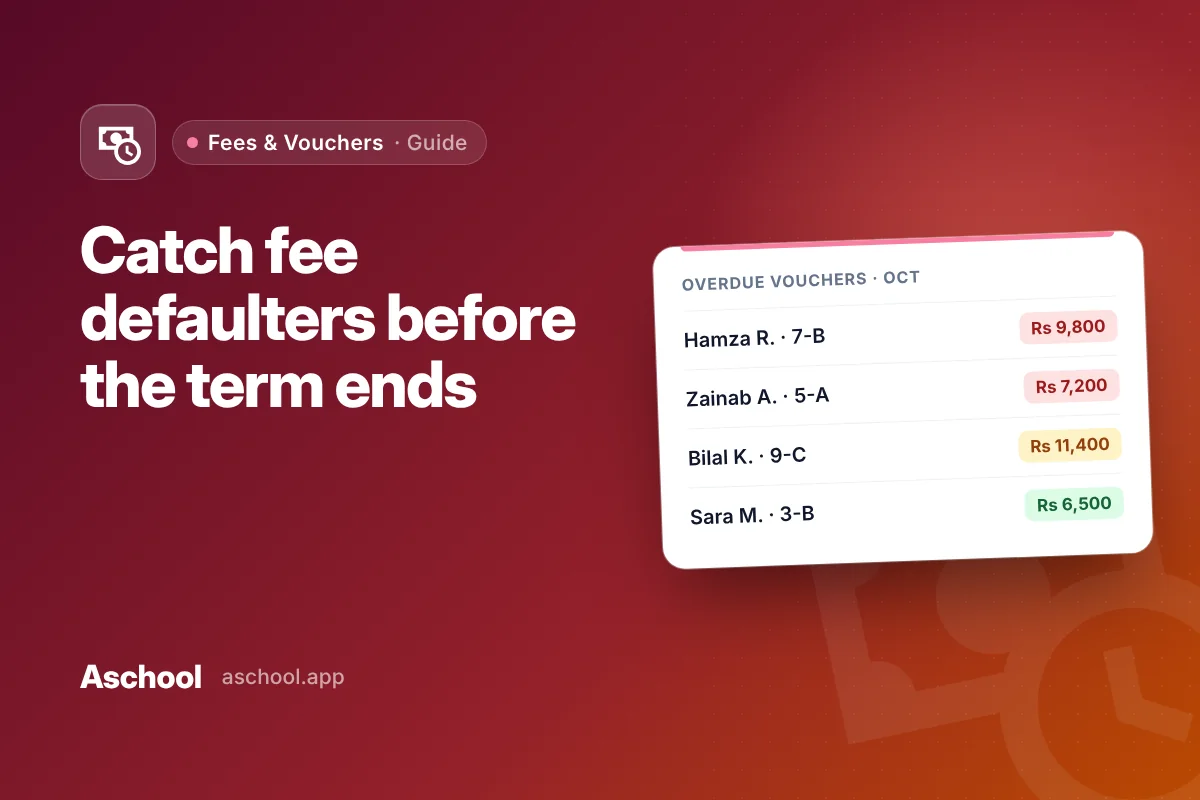
Overdue lists in seconds, not days
The finance team can see outstanding dues for the whole school or filter down to a single class. Instead of a quarterly reconciliation marathon, the office can check the overdue list every week, while the amounts involved are still small and easy to settle.
Late-fee rules applied consistently
Late-fee rules are configured once and applied by the system. That removes the awkward situation where one family is charged a late fee and another isn’t simply because different staff members handled their vouchers.
Reminders that reach parents where they are
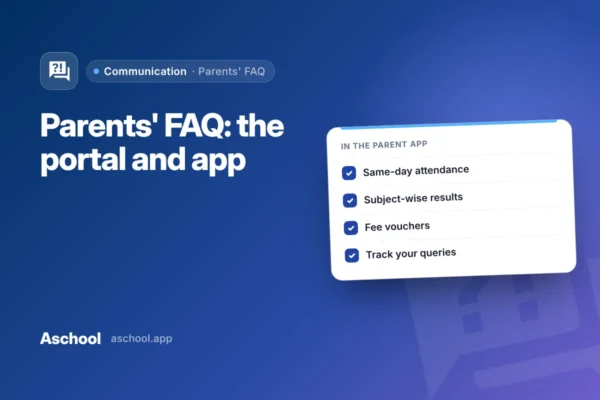
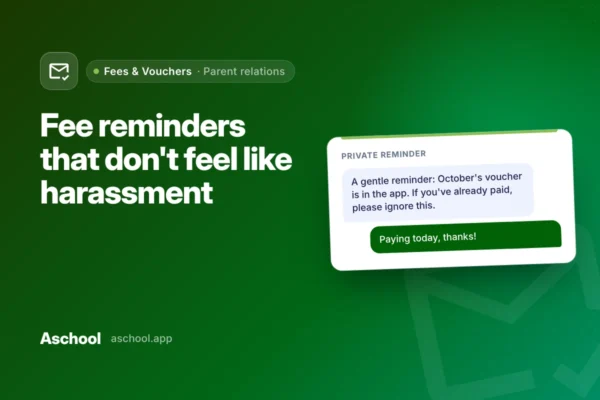
Using the Communication Center, the school can send a reminder to just the parents of students with overdue vouchers — not the whole school. With the WhatsApp bridge, that reminder lands in the app most parents check many times a day, and the voucher itself is waiting for them in the parent portal and mobile app.
A simple weekly routine
- Monday: open the overdue list for the current billing cycle.
- Same day: send a targeted, friendly reminder to those families only.
- Two weeks later: check the list again and call the few families still outstanding.
That’s it. Fifteen minutes a week replaces a painful audit at the end of term — and keeps the conversation with parents friendly.
The bottom line
Fee defaults grow in the dark. When every voucher’s status is visible and reminders take seconds to send, small balances get paid before they become big problems. If your school is still discovering defaulters at exam time, book a demo and see how early visibility changes the picture.