A school’s staff list is far more varied than it looks from the classroom. Alongside teachers, there are coordinators, clerks, accountants, lab assistants, drivers, conductors, guards, gardeners, and cleaning staff. Each group tends to be paid differently — and that variety is where payroll goes wrong.
The problem: one spreadsheet, many rules
Most schools start payroll with a single spreadsheet: names down the side, salary in one column. That works for a handful of people with simple salaries. It breaks down as soon as the structures diverge:
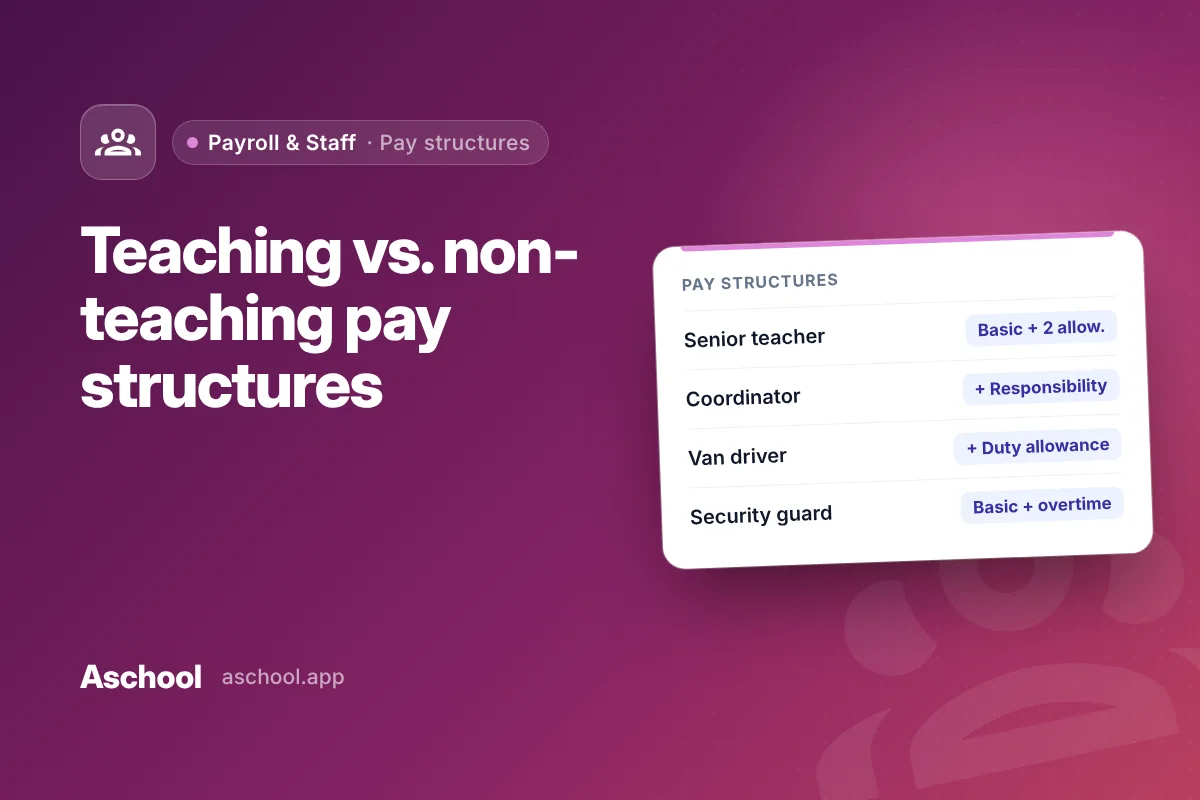
- Teachers may have a base salary plus allowances, with deductions linked to leave.
- Coordinators may receive an extra responsibility allowance.
- Transport staff may have different working days and duty allowances.
- Part-time or visiting staff may be paid on an entirely different basis.
Squeezing all of this into one sheet leads to extra columns, colour-coding, side notes, and formulas only one person understands. When that person is away on payday, nobody else can confidently run payroll.
Why mistakes concentrate on non-teaching staff
Non-teaching staff are often the lowest-paid people in the building and the least likely to question a mistake. A missed allowance or an incorrect deduction may go unnoticed for months — yet for a guard or a cleaner, even a small error can make a real difference to their household. Getting their pay right is a matter of fairness, not just accounting.
How Aschool handles different pay structures
Pay structures set per staff member
Aschool’s payroll module is tied to staff records. Each person’s salary structure, allowances, and deductions are set up once in their profile, so teaching and non-teaching staff can each have the structure that fits their role.
Both groups in one run
At the end of the pay period, admins generate payroll for all staff at once. The system applies each person’s configured allowances and deductions automatically — whether they’re a senior teacher or a van driver.
Attendance-linked adjustments
Because payroll connects to the same staff records, attendance-linked adjustments are based on recorded data rather than someone’s memory of who was absent.
A record of every run
Every payroll run is saved, so you can review what any staff member was paid and when. That protects staff and gives owners a clear audit trail.
Setting up structures well
- List every staff category in your school and how each is paid today.
- Write down every allowance and deduction, and who it applies to.
- Remove informal arrangements that nobody can explain — or make them formal.
- Enter each person’s structure into their staff record.
- Run a trial payroll and compare it with your last manual one before going live.
Conclusion
Every person who keeps a school running deserves to be paid correctly and on time. Structured payroll makes that the default rather than the exception. Book an Aschool demo to walk through your own staff categories.