A parent calls about a bullying incident. The receptionist writes it on a sticky note and passes it to the section coordinator. The coordinator means to follow up but gets pulled into exam duty. Two weeks later, the parent calls again — this time angry, and this time asking for the principal.
The original issue may have been solvable in a day. The real damage came from silence.
The problem: complaints have no home
In most schools, complaints arrive through many doors: phone calls, the front desk, notes in the diary, messages to teachers, conversations at pickup. None of these channels creates a record. Complaints depend on someone remembering, writing them down, and passing them to the right person.
The weak points are predictable:
- Complaints are lost when passed between people.
- Nobody knows who is responsible for resolving them.
- Parents have no way to check progress, so they call again — and again.
- Management never sees the overall pattern: which issues keep coming up, and where.
Why it matters
Parents rarely leave a school because of a single problem. They leave because they felt unheard. A complaint acknowledged and resolved — even if the answer isn’t exactly what they wanted — often increases a family’s loyalty. A complaint ignored does the opposite, and the family tells others.
How Aschool gives complaints a home
Raised directly from the mobile app
Parents can raise a complaint or query straight from the Aschool mobile app. It’s recorded in the system from the moment it’s submitted — no sticky notes, no relying on memory.
Tracked through to resolution
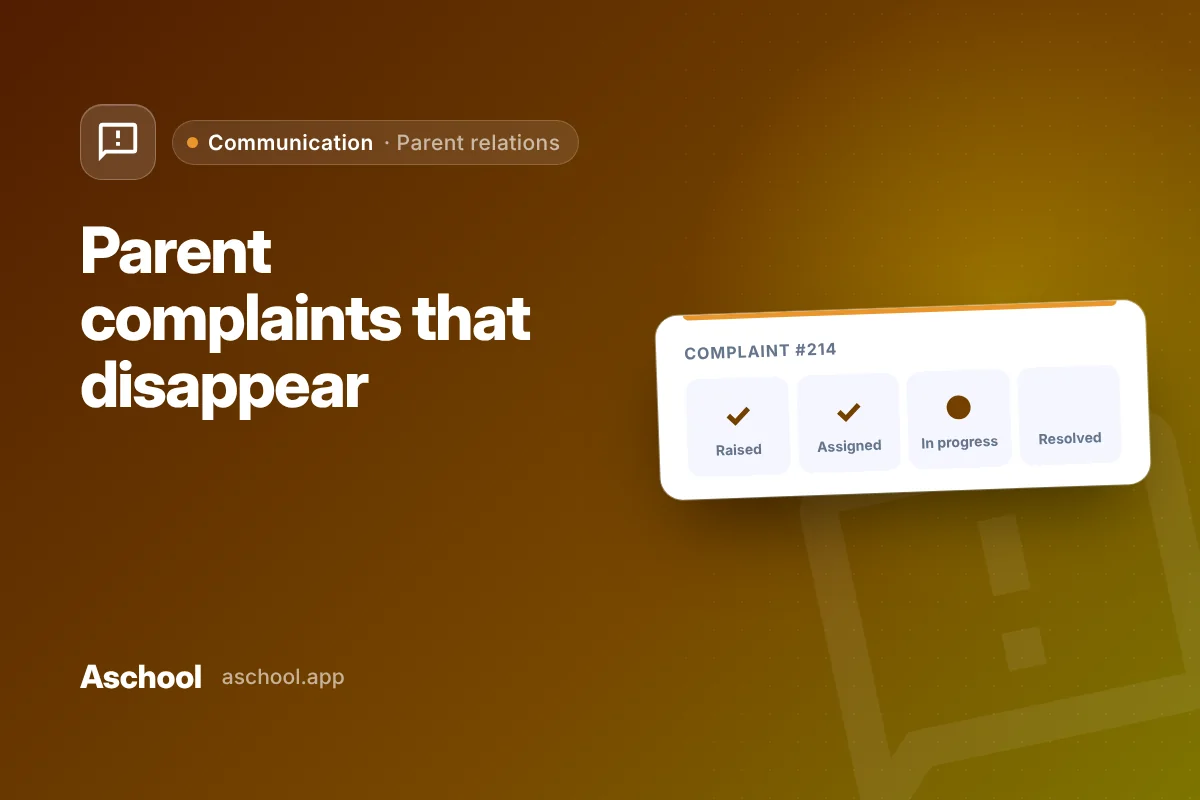
Each complaint has a status. Parents can follow it until it’s resolved, rather than wondering whether anyone has looked at it.
Fewer repeat calls
Because parents can see where their complaint stands, there’s less need to call the office for updates — freeing staff to actually work on the issue.
Linked to the student’s record
Complaints are raised within the same system that holds the student’s information, so staff handling them have the context they need.
A simple complaint-handling standard
- Acknowledge every complaint within one working day.
- Assign a clear owner for each issue.
- Update the status as work progresses, even if it’s “still investigating.”
- Close it with a clear explanation to the parent.
- Review recurring themes monthly — they often point to a fixable root cause.
Conclusion
Complaints are feedback the school would otherwise have to pay to collect. Give them a home, track them, and resolve them visibly. See complaint tracking in an Aschool demo.