Schools hold a surprising amount of sensitive information: children’s names and photographs, parents’ phone numbers and addresses, fee payment histories, exam results, complaints, and staff salaries. Most schools would say they protect this data. Fewer could say exactly who can see it.
The problem: privacy by accident, not by design
In many schools, access to information is determined by where it happens to be kept rather than by any decision:
- Fee registers sit on an open shelf in the office.
- Result sheets are shared as whole-school spreadsheets.
- Parent phone numbers are visible to everyone in class WhatsApp groups.
- The staff salary sheet is on a shared computer with no password.
- Former staff still have copies of files on their personal devices.
None of this is malicious. But it means sensitive information is available to people who have no reason to see it.
Why it matters
Privacy lapses in a school can cause real harm: embarrassment for a family whose fee arrears become gossip, distress for a student whose results are shared beyond their parents, or friction among staff when salaries are seen. Parents increasingly expect schools to handle their family’s information carefully — and trust, once lost, is hard to rebuild.
The principle: each person sees what their role needs
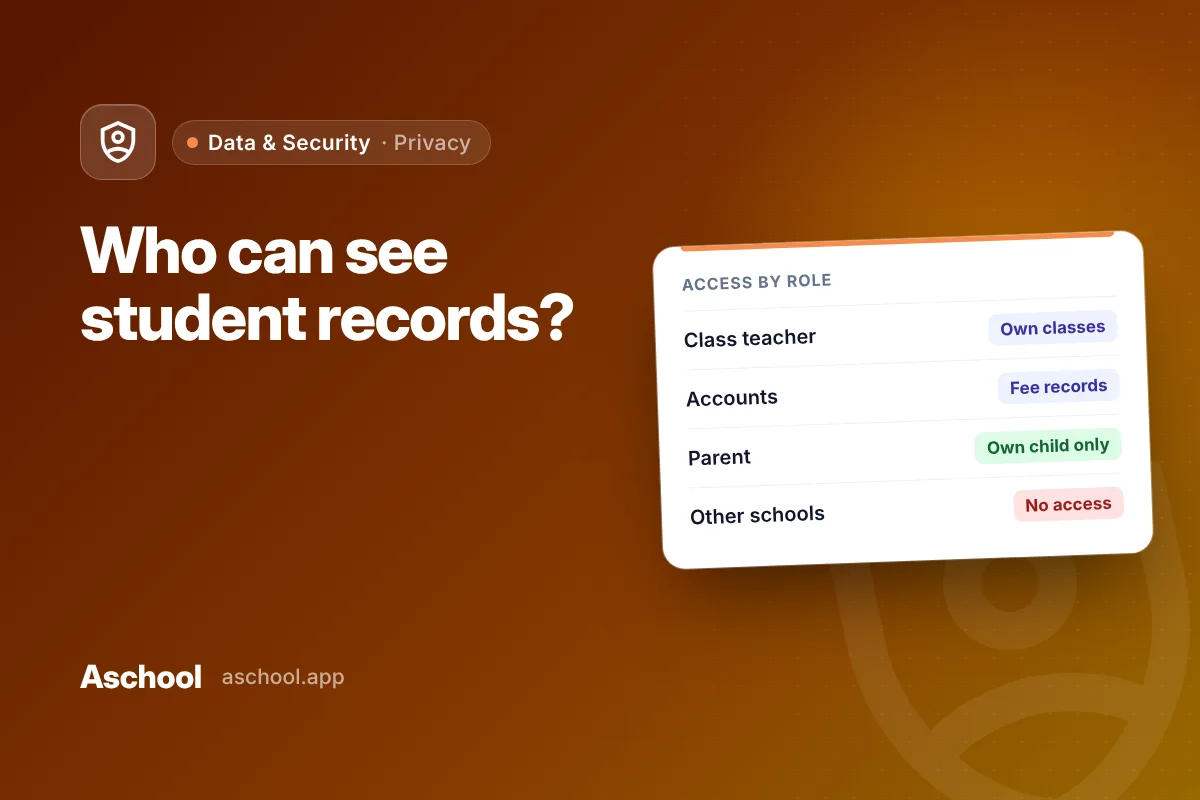
Good data privacy in a school isn’t about locking everything away. Teachers need their class lists. Accounts needs fee records. Parents need their own child’s information. The goal is that each person can see what their role requires — and not much more.
How Aschool approaches it
Roles and permissions for staff
When staff are added to Aschool, they’re assigned roles and permissions. Access is based on what each person does, rather than everyone sharing the same files.
Parents see their own children
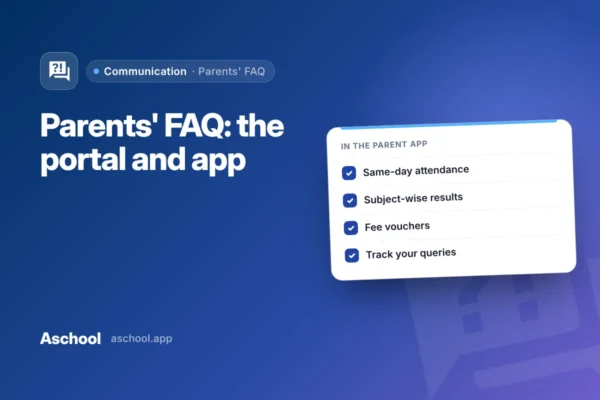
Through the parent portal and mobile app, families see their own child’s attendance, results, and vouchers — not a class-wide list.
Messages without exposing numbers
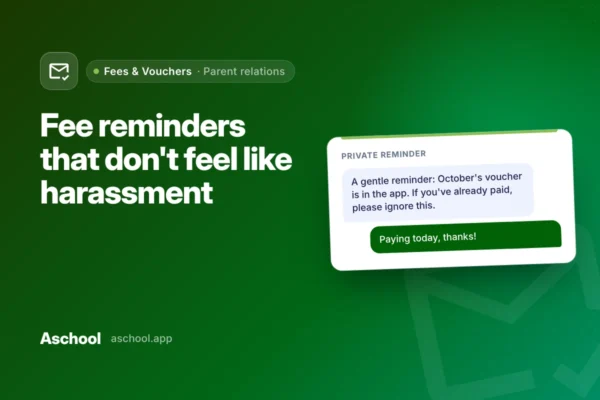
School messages reach parents through the Communication Center — including via the WhatsApp bridge — without parents’ numbers being displayed to an entire class group.
Each school’s data kept separate
Aschool is multi-tenant: every school’s students, staff, fees, and records are scoped to that school alone. No school can see another school’s data.
Oversight and records
At the platform level, audit logs and database backups provide visibility and safety nets, while day-to-day school data remains under each school’s own admin.
Privacy habits every school should adopt
- Remove system access promptly when staff leave.
- Avoid sharing whole-school lists when a smaller one will do.
- Tell parents how their information is used and who can see it.
- Review staff roles at the start of each academic session.
Conclusion
Families trust schools with their children and their information. Role-based access makes good privacy the default rather than an accident. Learn more in an Aschool demo.